How to Build a Strong Brand Online is one of the most important steps a business can take in today’s digital environment. Whether you are launching a startup, running a small business, selling products online, offering professional services, or developing a personal brand, people will often discover you online before they ever interact with you directly.
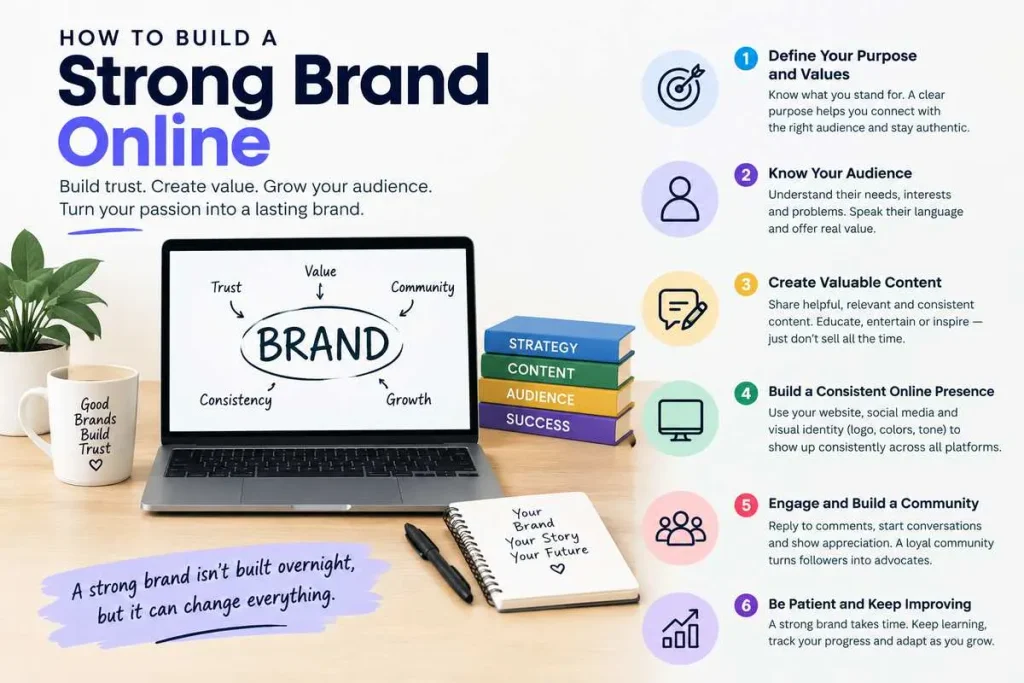
But simply having a website or social media account does not automatically create a strong brand. A recognizable brand is built through consistent communication, valuable experiences, trust, and a clear understanding of the people you want to reach.
This is where digital marketing becomes valuable. Search engines, social media platforms, websites, email, online content, and other digital channels give businesses multiple ways to introduce themselves to potential customers and maintain relationships with existing ones.
A successful online brand is not created overnight. It develops through repeated audience interactions. Every blog post, social media update, website page, email, advertisement, and customer conversation contributes to how people perceive your business.
In this guide, you will learn practical ways to use digital marketing to create a recognizable online brand, increase brand awareness, connect with your target audience, build credibility, and develop a sustainable online presence.
What Makes an Online Brand Strong and Recognizable?
Online branding means shaping a clear and memorable brand identity and maintaining it consistently across websites, social media, and other digital platforms.
Your brand is more than a logo. It includes the way your business looks, communicates, behaves, and makes customers feel. Your website design, social media content, writing style, colors, images, customer service, and overall message all contribute to your brand identity.
There is also an important difference between having an online presence and having a strong online brand.
An online presence means that your business can be found on the internet. A strong brand goes further. It helps your audience recognize your brand more easily while showing them why your business stands apart from competitors.
For example, two businesses may offer similar products. One may simply publish product photographs and prices. The other may consistently communicate its values, share helpful information, respond to customers, maintain a recognizable visual style, and demonstrate expertise.
The second business has more opportunities to develop a memorable identity.
A strong online brand can help you:
- Increase brand awareness
- Build customer trust
- Stand out from competitors
- Communicate your values clearly
- Develop stronger customer relationships
- Encourage repeat purchases
- Create a consistent customer experience
The objective is not simply to become visible. The goal is to create a brand that people can easily identify, find valuable, and feel confident in.

Define Your Brand Identity
Before starting your digital marketing activities, clarify what your brand represents. Your brand identity includes the language, visuals, personality, and messages that shape how people see your business. A clear identity helps you maintain a consistent presence across your website, social media, emails, advertisements, and other online platforms.
Start by identifying your brand’s purpose. Ask yourself:
- What does my business provide?
- Which problem do I solve?
- Who can benefit from my business?
- What makes my brand different?
- How should customers remember my brand?
Your brand personality matters too. You might choose a professional, friendly, modern, or energetic tone depending on your audience. Pick a communication style that suits your customers and use it consistently.
Your visual identity should also remain recognizable. Consider your:
- Logo
- Colors
- Fonts
- Photography style
- Graphics
- Website design
- Social media templates
Consistency does not mean using identical designs everywhere. Instead, your main branding elements should work together so customers can recognize your business across different platforms.
For example, someone who discovers your brand on Instagram should experience a similar look and feel when visiting your website. A clear brand identity gives your digital marketing efforts a strong and recognizable foundation.
Understand Your Target Audience
Trying to attract everyone can make your marketing message too general. A better approach is to identify your ideal customers and create content that speaks directly to their needs.

Your target audience can be understood through factors such as:
- Age
- Location
- Occupation
- Interests
- Buying habits
- Income
- Challenges
- Online behavior
- Preferred platforms
Demographics are only one part of audience research. You should also understand what customers want, what problems they face, what questions they have, and what may prevent them from buying.
For example, someone looking for website design may want more enquiries, greater customer trust, or a more professional online presence, not just a new website.
Knowing your audience also helps you choose the right digital channels. If your customers are active on social media, focus more on social media marketing. If they search online for solutions, SEO and content marketing may work better.
Your digital marketing strategy should be built around how your audience searches, communicates, and makes decisions.-][
”
Build a Professional Website
A strong website gives your brand a central place to connect with potential customers. Social media may attract attention, but your website allows visitors to learn more about your business and decide whether your products or services are right for them.
Your website should make three things clear:
- What you offer
- Who you serve
- Why customers should choose you
Make the site easy to use by including:
- Mobile-friendly design
- Fast-loading pages
- Simple navigation
- Clear headings
- Visible contact details
- Strong calls to action
- Quality visuals
- Useful product or service information
- Customer reviews
- Trust elements
Avoid unnecessary information and complicated layouts. Visitors should understand your business without having to search through several pages.
A well-organized website can also support SEO with relevant keywords, clear headings, descriptive page titles, internal links, useful content, and a logical structure.
Most importantly, make the website helpful for people first. SEO should improve the user experience, not make the site difficult to navigate.
For businesses looking to strengthen their online presence, the best digital marketing strategist in Thrissur can help develop effective digital marketing strategies that connect with the right audience.
How to Build a Strong Brand Online Through SEO
SEO is an important part of a long-term digital marketing plan. It helps your business reach people already searching for information, products, or services in your industry.
For example, someone looking for a solution to a particular problem may discover your website through a helpful article. This can introduce your brand to potential customers who were previously unfamiliar with your business.
Research the Right Keywords
Keyword research helps you discover the words and questions your audience enters into search engines. Choose relevant terms and include them naturally in your website and content.
Improve On-Page SEO
Important on-page elements include:
- Page titles
- Headings
- URLs
- Image alt text
- Internal links
- Relevant information
- Search intent
These details make your pages easier for users and search engines to understand.
Pay Attention to Technical SEO
Technical SEO focuses on how your website functions behind the scenes. Factors such as mobile usability, loading speed, crawlability, and site structure can influence how easily users and search engines access your content.
Create Content That Matches Search Intent
Adding keywords alone will not make content useful. Your page should provide the type of information the searcher is actually looking for.
For instance, someone searching for “how to improve Instagram engagement” would expect practical advice and actionable steps rather than an article that mainly advertises a marketing service.
When your content answers genuine questions, it can support both search visibility and brand credibility.
Build Online Authority
Quality references and links from relevant websites can strengthen your website’s authority. Rather than using artificial link-building techniques, focus on publishing content that other websites may find useful enough to mention.
SEO is not an overnight process. Regularly improving your website and content is a more sustainable approach than relying on quick-ranking tactics.
Create Useful Content
Content marketing allows you to share your knowledge while giving your audience something genuinely useful. People often search for answers before they are ready to purchase, so helpful information can introduce them to your brand.

Depending on your business, you could create:
- Blog posts
- How-to guides
- Videos
- Case studies
- Infographics
- FAQs
- Checklists
- Industry advice
- Social media posts
- Customer experiences
For example, a skincare brand could publish advice on creating a simple skincare routine instead of constantly promoting its products. A financial business could explain basic money-management concepts to help people understand important topics.
The aim is to become a useful source of information rather than making every piece of content a sales message.
Before creating content, ask:
- Who is this for?
- What problem does it solve?
- What will the reader learn from it?
Consistently publishing useful content can help your business become more recognizable while building audience trust over time.
Leverage Social Media Marketing
Social media marketing allows businesses to communicate directly with their audience. However, building a strong social presence is not simply about increasing follower numbers. The real goal is to encourage meaningful conversations and give people a reason to connect with your brand.
Choose platforms where your target customers are actually active. There is no need to maintain an account on every social network if your audience does not use them.
Your social media content could include:
- Educational tips
- Short-form videos
- Product demonstrations
- Customer experiences
- Behind-the-scenes moments
- Industry advice
- Questions and polls
- Brand stories
- Helpful tutorials
- User-generated content
Storytelling can make your brand more relatable. You can share how your business started, explain how a product is made, introduce your team, or show how your services help customers.
Maintaining a regular posting schedule can also help keep your brand visible. You do not need to publish something every day; choose a schedule that you can realistically maintain.
Most importantly, interact with the people who engage with your content. Reply to comments, answer questions, listen to feedback, and join relevant discussions. Genuine interaction can turn social media into a platform for building lasting customer relationships rather than simply broadcasting promotional messages.
Use Email Marketing to Build Relationships
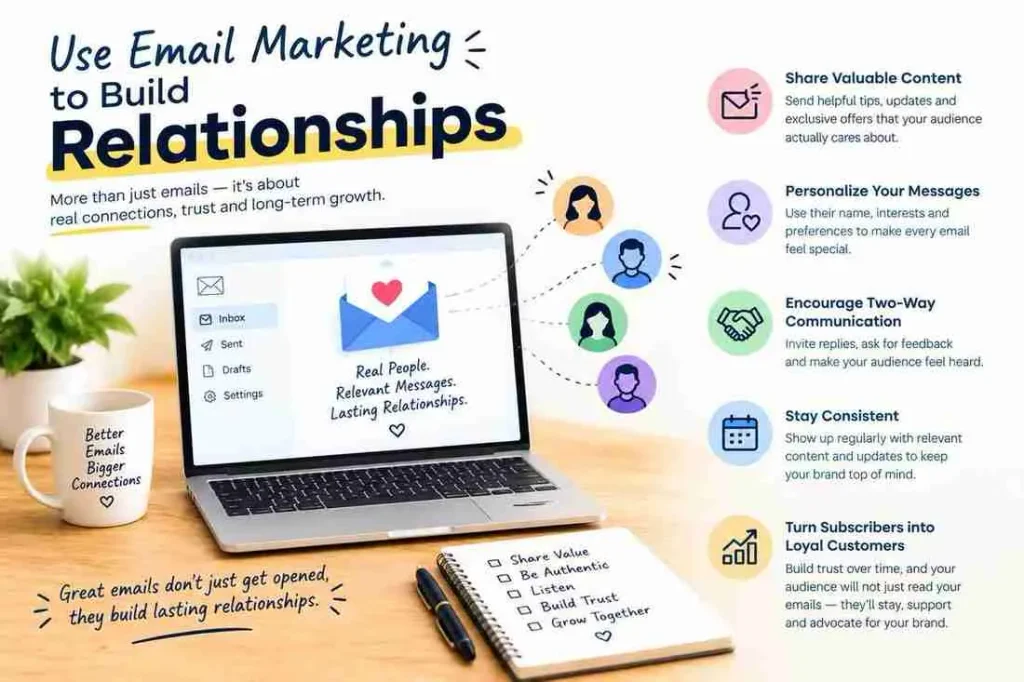
Not everyone who visits your website is ready to purchase immediately.
Email marketing provides a way to continue communicating with people who have voluntarily subscribed to your updates.
Businesses can use email for:
- Newsletters
- Educational information
- Product updates
- New content
- Special offers
- Personalized recommendations
- Customer onboarding
- Event announcements
- Follow-up messages
The key is to provide value.
If every message is focused on selling something, subscribers may stop paying attention.
Instead, combine promotional content with useful information. For example, a clothing business could send styling tips, seasonal fashion ideas, and useful guides alongside product recommendations.
Personalization can also make email communication more relevant. Even simple approaches, such as using a subscriber’s interests to determine which content they receive, can create a better experience.
Over time, a well-planned email marketing strategy can help you stay connected with customers long after they first discover or purchase from your business.
Build Trust and Credibility Online
Trust plays a vital role in building a strong and lasting brand.
People are often cautious when interacting with businesses they do not know. Your online presence should therefore give potential customers enough information to feel comfortable taking the next step.
Useful trust signals include:
- Genuine customer reviews
- Testimonials
- Case studies
- Clear contact information
- Professional website design
- Transparent business information
- Helpful educational content
- Accurate product descriptions
- Consistent communication
- Authentic customer experiences
Social proof can be especially useful. When potential customers see real experiences from other people, they may feel more confident about your business.
However, authenticity matters.
Do not create fake reviews or make exaggerated claims about your results. A trustworthy brand should be honest about what it can and cannot provide.
If something goes wrong, responding professionally and transparently can sometimes strengthen trust more than pretending problems never happen.
Your reputation is built through every customer interaction.
Measure and Improve Your Digital Marketing Strategy
An effective digital marketing strategy should include clear and measurable goals.
Without tracking performance, it is difficult to know which activities are helping your business and which need improvement.
The metrics you monitor should depend on your goals.
For example, useful measurements may include:
- Website traffic
- Organic search traffic
- Leads
- Conversion rates
- Social media engagement
- Email engagement
- Search rankings
- Returning visitors
- Customer retention
Suppose a blog article receives thousands of visitors but generates very few inquiries. That does not necessarily mean the article failed.
It could mean the content attracts the wrong audience, the call to action is unclear, or the page does not connect naturally with your services.
Use performance data to ask better questions.
- What content attracts the right visitors?
- Which pages generate leads?
- Which social posts create meaningful conversations?
- Which email campaigns receive the strongest response?
This process of measuring, learning, testing, and improving helps your marketing become more effective over time.
Common Mistakes to Avoid When Building an Online Brand
Even businesses with good products can struggle online when their marketing lacks direction.
Here are some common mistakes to avoid.
Trying to Reach Everyone
A broad audience can make your brand message less focused. Instead, identify the customers who are most likely to need and value your products or services.
Inconsistent Branding
Frequently changing your colors, communication style, visuals, or brand message can make it harder for people to recognize your business. Keep your important brand elements consistent across platforms.
Overlooking SEO
A website may not attract enough organic traffic if SEO is ignored. Use relevant keywords, useful content, clear headings, and a search-friendly structure to improve your visibility.
Posting Without a Clear Plan
Publishing random social media content may keep your accounts active, but it does not always support your business objectives. Create content with a specific purpose and connect it to your overall digital marketing strategy.
Making Every Post Promotional
Constantly trying to sell can make your audience lose interest. Combine promotional posts with educational, helpful, and entertaining content that provides genuine value.
Ignoring Customer Interaction
Comments, questions, and messages give you opportunities to connect with your audience. Responding thoughtfully can strengthen relationships and make customers feel valued.
Failing to Track Performance
Without monitoring your results, it can be difficult to know which marketing activities are actually working. Track important metrics and use the information to improve your strategy.
Copying Other Brands
Studying competitors can help you understand the market, but copying their style or messaging can make your business look ordinary. Develop a distinct voice and highlight what makes your brand different.
Expecting Results Too Quickly
SEO, content marketing, social media growth, and online branding usually take time. Consistent effort and gradual improvements are more reliable than expecting one campaign or post to create instant success.
Final Thoughts
Building a recognizable online brand involves much more than designing a logo, creating social media profiles, or launching a website. It requires a clear identity, knowledge of your target audience, valuable content, consistent communication, and a strong focus on customer experience.
Digital marketing brings these elements together and gives businesses different ways to grow their online presence. SEO can help potential customers discover your business through search engines. Content marketing can showcase your knowledge and provide useful information. Social media marketing can encourage conversations and build a community, while email marketing can help you stay connected with customers over time.
Your website can act as the central point of your online presence, helping visitors understand your business and take meaningful actions. However, using more platforms does not automatically create a better strategy. The strongest approach focuses on the right audience, delivers a clear message, offers genuine value, and improves through measurable results.
Start with the basics if you are building your brand from the beginning. Define your brand identity, understand your audience, improve your website, publish useful content, and choose the digital channels that fit your business. Most importantly, stay consistent.
A strong brand develops through repeated experiences. Every search, website